
Key Takeaways
- Debris removal works best when it is planned before demolition, renovation, excavation, or cleanup begins.
- Defined collection zones and travel routes can help crews keep access areas clear and reduce unnecessary material handling.
- Equipment, attachments, and lifting methods should match the size, weight, shape, and condition of the debris.
- Potentially hazardous materials must be kept separate from routine construction waste.
- Daily inspections, clear communication, and simple tracking help teams improve safety, productivity, and project closeout.
Construction cleanup is not simply a final task for the last day on site. Debris affects where people walk, where equipment travels, how materials are staged, and whether the next phase of work can begin on time. A properly placed construction debris tarp can also help contain lightweight material during collection or transport, but it should be part of a broader debris-control plan.
Whether a crew is removing broken concrete, scrap lumber, packaging, drywall, roofing material, soil, or demolition waste, the goal is the same: move material out of the active work area safely and predictably. Treating debris handling as a planned workflow helps supervisors avoid blocked access routes, crowded staging areas, repeated handling, and avoidable confusion between workers and machines.
Why Debris Removal Deserves a Formal Plan
Loose material can create trip hazards, hide ground conditions, restrict emergency access, and interfere with trucks, lifts, loaders, and delivery vehicles. On a renovation project, for example, a pile of removed wall material may block the path needed for a scissor lift or prevent new materials from reaching the work face. The crew then loses time relocating debris before productive work can continue.
A formal plan does not need to be complicated. It should identify what will be removed, where it will go, how it will be moved, and who controls the process. When these decisions are made before work starts, cleanup becomes a regular part of production rather than a disruptive catch-up task.
Start With a Site and Material Review
Before the first load is moved, review the work area, access points, overhead obstructions, ground conditions, traffic patterns, and disposal locations. Consider where trucks will enter, turn, wait, load, and exit. Mark areas that must remain open for workers, emergency vehicles, the public, or other trades.
Questions to answer before the shift
- What debris types and approximate volumes will the work produce?
- Which materials have sharp edges, unstable shapes, or difficult handling characteristics?
- Where will each material be collected, sorted, and loaded?
- What route will loads follow from the work area to a truck, container, or processing point?
- Could rain, wind, mud, heat, or low visibility affect handling conditions?
- Which areas must stay clear throughout the workday?
Build a Simple Debris Flow
Debris should move in one planned direction whenever practical. A clear flow reduces cross-traffic and makes it easier for workers to understand where materials belong. The process can be adapted to a small interior renovation or a large demolition site.
- Remove material from the active work area.
- Place it in a controlled collection zone.
- Sort materials when it is practical and safe to do so.
- Load or move the material with suitable equipment.
- Inspect and clear the area before the next work phase begins.
Choose Equipment Based on the Load
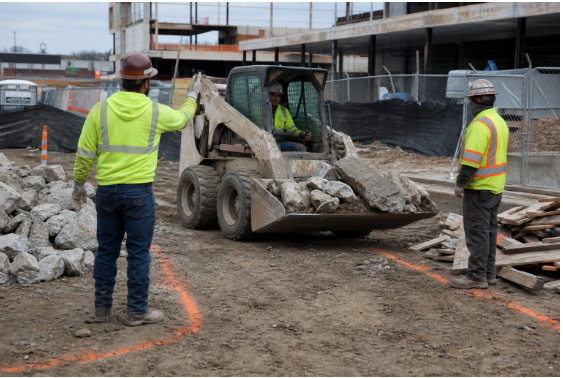
No single machine or tool fits every debris-removal task. Skid steers and compact loaders can be useful for short-distance movement. Excavators may support demolition, digging, sorting, and handling larger materials. Dump trucks and roll-off containers meet hauling needs, while hand tools and carts may be the better choice in tight areas where powered equipment cannot operate safely.
For vertical lifting, crews should review load limits, attachment ratings, ground support, visibility, and operator qualifications before work begins. Cranes and derricks used during demolition and construction activities are subject to safety requirements that address issues such as inspections, signal persons, ground conditions, and worker exposure to lifting hazards.
Separate Ordinary Debris From Hazardous Materials
Not all construction debris can be treated as general waste. Older buildings, damaged structures, and renovation areas may contain lead, asbestos, solvents, treated wood, chemicals, or other materials that need specialized handling. Unknown material should never be casually mixed into a general debris pile. Pause work in the affected area, limit access, and obtain direction from the appropriate safety, environmental, or regulatory professional.
Practical sorting categories
- Concrete, brick, and masonry
- Clean wood and lumber
- Scrap metal
- Drywall and gypsum materials
- Roofing materials
- Soil, rock, and land-clearing debris
- Unknown or potentially hazardous materials
Reduce Dust, Spills, and Runoff
Debris handling can affect nearby workers, neighboring properties, roads, storm drains, and waterways. Wet methods, covered loads, secured containers, barriers, and regular sweeping can help control the migration of loose dust and material. Stormwater flowing across a demolition site can pick up sediment, trash, and building materials, so crews should protect drains and adjust controls as site conditions change.
Coordinate Workers and Equipment
Loaders, trucks, cranes, laborers, and subcontractors should not operate on assumptions. Start each shift with a short discussion of removal tasks, travel paths, exclusion zones, weather conditions, vehicle direction, spotter assignments, and emergency procedures. One clear signal system is essential. Radios, hand signals, spotters, and marked routes should reinforce one another rather than create conflicting instructions.
Use a Pre-Shift Inspection Checklist
- Inspect collection areas for hidden hazards and unstable piles.
- Check containers, tarps, straps, chains, hooks, and attachment points.
- Remove damaged tools and lifting accessories from service.
- Confirm that the equipment has enough room to turn, stop, and load safely.
- Check for soft ground, slopes, voids, standing water, and overhead hazards.
- Keep workers clear of suspended loads and unstable material.
- Confirm that trucks, containers, and equipment will remain within rated capacity.
Track Progress and Plan for Recovery
Simple job site metrics can reveal recurring delays without creating unnecessary paperwork. Track debris-handling trips, truck wait time, contaminated loads, near misses, end-of-shift cleanup time, and material sent for reuse or recycling. These notes can help a supervisor adjust container placement, equipment scheduling, staffing, and haul timing on future work.
Early sorting may also preserve materials with recovery value, including metal, concrete, asphalt, clean wood, fixtures, and reusable building components. Local requirements, material conditions, hauling distance, and available processors will determine what options are practical for a specific project.
Common Debris Removal Mistakes
- Waiting until the end of the project to organize the cleanup.
- Using containers that are too small or poorly located.
- Mixing hazardous and ordinary materials.
- Leaving debris beside active travel paths or access points.
- Overloading trucks, containers, tools, or lifting devices.
- Allowing multiple people to give conflicting directions.
- Ignoring changing weather, ground conditions, dust, or visibility.
A Practical Debris Removal Plan
Build each plan around the expected debris types, estimated volumes, collection and loading zones, equipment choices, traffic routes, communication procedures, and inspection responsibilities. Review the plan with the crew before work begins, then update it whenever site conditions, work phases, or material streams change. A controlled debris process can protect workers, keep work areas accessible, reduce downtime, and support a cleaner project closeout.