
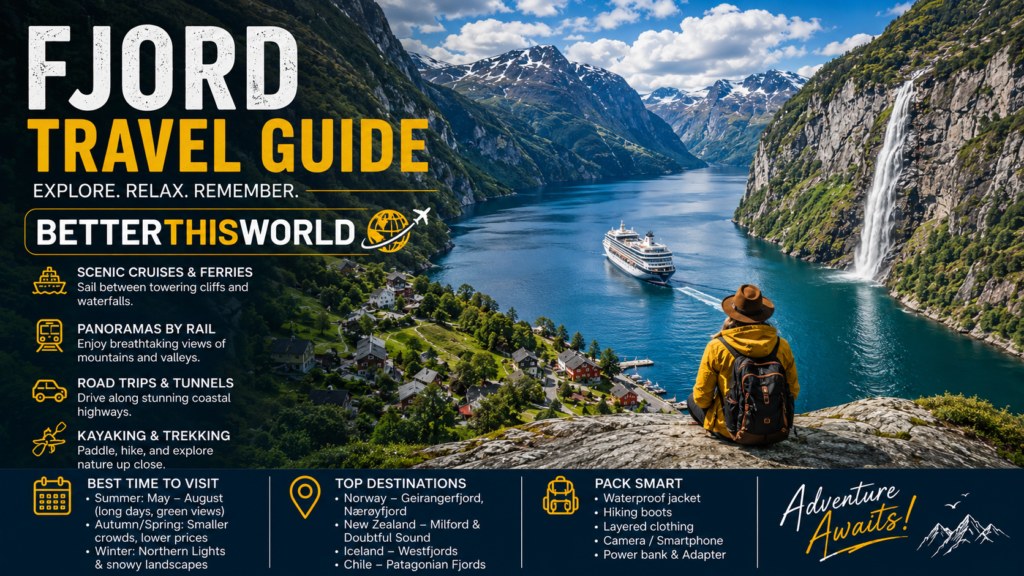
Traveling is one of the best ways to refresh our minds and explore the natural beauty of the world. When we talk about unique landscapes, majestic mountains, and crystal-clear water, the first thing that comes to mind is the breathtaking fjords. Exploring these deep natural inlets provides an unforgettable experience for nature lovers.
In today’s travel guide, BetterThisWorld explains how to plan this trip easily, navigate the best locations, and make your journey smooth, affordable, and memorable.
Overview of Fjords
A fjord is a long, narrow inlet of the sea flanked by steep cliffs or mountains, created over thousands of years by glacial activity. When you stand near a fjord, you see giant green or snow-capped peaks rising directly out of deep blue water.
Traveling across the fjords allows you to disconnect from daily busy routines. In my opinion, it is one of those bucket-list trips that every travel enthusiast must experience at least once in life.
Understanding Fjord Travel and Its Practicality
Planning a trip to the fjords might sound complicated at first, but with modern travel infrastructure, it is very straightforward. For example, if I am planning a fjord journey, I can easily research local electric ferries, check scenic train schedules, and book cozy fjord-side cabins online within a few minutes.
Traveling across fjords typically involves a combination of scenic transportation:
-
Scenic Cruises & Ferries: The most popular way to sail between towering cliffs and view massive waterfalls dropping straight into the sea.
-
Panoramas by Rail: Famous routes like Norway’s Flåm Railway offer panoramic views of mountain passes, valley streams, and traditional farmsteads.
-
Road Trips & Tunnels: Driving along coastal highways that wind along the edge of water and pass through long underground tunnels.
-
Kayaking & Trekking: Ideal for active travelers who want to paddle in calm waters or hike up to panoramic clifftop viewpoints.
Top Fjord Destinations Around the World
While fjords exist in several parts of the world, a few regions stand out for their accessibility, safety, and scenery:
-
Norway (The Fjord Capital): Home to the Geirangerfjord and Nærøyfjord (both UNESCO World Heritage Sites), offering narrow passages and classic Scandinavian scenery.
-
New Zealand (Milford & Doubtful Sound): Located on the South Island, featuring dramatic rainforests, mist-covered cliffs, and rich marine life.
-
Iceland (Westfjords): Offers remote, quiet fjords away from large tourist crowds, perfect for peaceful nature exploration.
-
Chile (Patagonian Fjords): Known for massive blue glaciers and dramatic wilderness landscapes at the southern tip of South America.
Best Time to Visit and Practical Tips
Choosing the right season depends on what kind of experience you want:
-
Summer (May to August): Long daylight hours, green landscapes, warm weather, and full ferry schedules. Best for hiking and kayaking.
-
Autumn/Spring (May & September): Smaller crowds, mild weather, and cheaper accommodation rates.
-
Winter (November to March): Ideal for viewing the Northern Lights over snow-covered fjord peaks, though some ferry lines operate on reduced schedules.
Essential Packing Checklist
-
Waterproof outer jacket and sturdy hiking boots.
-
Layered clothing for sudden weather changes.
-
High-quality camera or smartphone for scenic landscapes.
-
Universal power adapter and portable power bank.