
Key Takeaways
- A written room-by-room checklist helps create consistent results across every stay.
- Turnovers should cover cleaning, linen changes, restocking, damage reporting, and final inspection.
- Same-day resets need prepared supply kits, realistic schedules, and a backup plan.
- Clear standards describe the finished result, not simply the task to perform.
- Photo documentation and inventory controls can simplify quality checks and follow-up work.
A short-term rental turnover is more than a quick tidy between bookings. It is a repeatable process for cleaning, restocking, inspecting, and preparing a property so the next guest can arrive at a safe, comfortable, and well-presented space. Hosts who coordinate an Airbnb cleaning service or manage an in-house team benefit from written standards that make each reset easier to complete and review.
The best turnover systems balance thoroughness with realistic timing. They give cleaners clear instructions, identify property-specific details, and build in a final check before a listing is marked ready for arrival.
Why Turnover Standards Matter More
Guests notice the details immediately. A spotless bathroom, fresh bedding, an empty refrigerator, working lights, and clear entry instructions all shape the first impression. In contrast, leftover food, hair, odors, missing towels, or an unreported maintenance issue can lead to avoidable complaints and extra work.
A normal household cleaning list is not enough for a rental property. A turnover standard must account for the previous guest leaving, the next guest arriving, supplies being consumed, and the need to identify damage or safety concerns. It also gives every cleaner the same baseline when more than one person works at the property.
What a Complete Turnover Checklist Should Cover
Before Cleaning Begins
- Confirm departure and arrival times, along with any approved late checkout.
- Review notes about pets, children, accessibility needs, or special guest requests.
- Bring fresh linen sets, rubbish bags, cleaning products, replacement supplies, and maintenance basics.
- Inspect the property before beginning, noting left-behind items, unusual messes, or damage.
Kitchen Reset
- Remove rubbish, expired food, and items left by prior guests.
- Clean counters, sinks, cabinet handles, dining surfaces, and appliance exteriors.
- Check the refrigerator, freezer, microwave, oven, dishwasher, and coffee equipment.
- Wash, dry, and return dishes, glasses, cookware, and utensils to their assigned places.
- Restock agreed essentials such as soap, dishwasher tablets, coffee supplies, and bin bags.
Bathroom, Bedroom, and Living Area Reset
- Sanitize toilets, sinks, showers, tubs, faucets, and other high-touch surfaces.
- Remove visible hair, soap residue, water marks, dust, and rubbish.
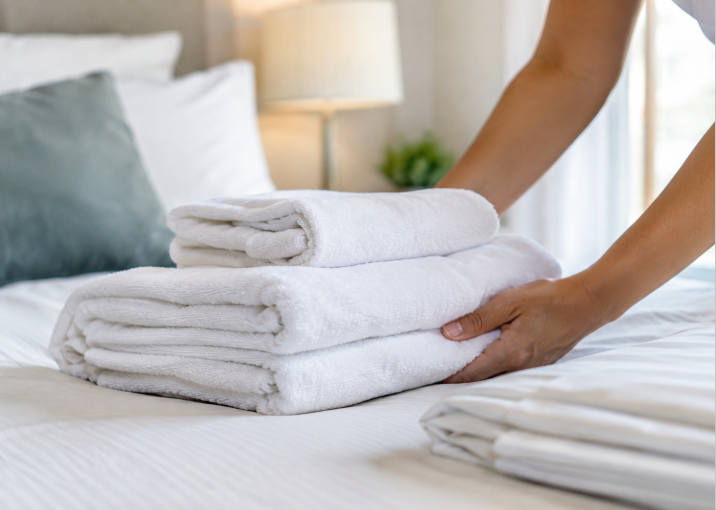
- Replace towels, bath mats, toiletries, and toilet paper.
- Strip used beds, inspect mattress protectors, and remake beds with clean linens.
- Dust furniture, lamps, shelves, vents, and skirting boards, then vacuum or mop floors thoroughly.
- Reset cushions, curtains, remotes, welcome materials, and any guest information.
How to Build a Practical Cleaning Standard
Useful checklists explain what “done” looks like. Replace vague instructions such as “clean the bathroom” with outcomes such as “mirror is streak-free,” “bin is empty,” “toilet paper meets the minimum stock level,” and “all towels are fresh and folded.” Clear outcomes reduce interpretation and speed up inspections.
Use a two-part format. First, list universal tasks that apply at every property, including linens, bathrooms, rubbish removal, floors, and supply checks. Then add property-specific tasks for features such as hot tubs, balconies, fireplaces, outdoor kitchens, smart locks, or special appliances.
Planning for Same-Day Turnovers
Work backward from the next guest’s arrival time. Estimate the job based on bedroom and bathroom count, layout, laundry access, outdoor areas, and the property’s recent condition. Prepare linen sets and supply kits before the cleaner arrives, and assign priority areas first: bathrooms, beds, kitchen, entry points, and floors.
- First 10 minutes: Inspect rooms, collect used linens, remove rubbish, and identify urgent issues.
- Core cleaning period: Reset bedrooms, bathrooms, kitchen, and living spaces.
- Final cleaning period: Finish floors, restock supplies, stage the property, and address minor repairs.
- Last 10 minutes: Complete the final inspection and take required condition photos.
Quality Control Before Guest Arrival
Inspect from the guest’s perspective. Walk through the entrance, smell the rooms, look for visible dust or stains, and check that beds, towels, rubbish bins, and supplies are ready. Test lights, taps, toilets, remotes, heating or cooling controls, Wi-Fi equipment, and access systems where applicable.
Timestamped photos of finished beds, bathrooms, kitchens, and any problem areas can create a simple record of the property’s condition. If a cleaner finds damage, photograph it, record its location, notify the responsible person, and decide whether the home remains suitable for the next arrival.
Cleaning Supplies and Inventory Controls
Set minimum stock levels for high-use items, including toilet paper, hand soap, bin bags, detergent, coffee, and paper products. Keep backup supplies in a dry, labeled storage area, separate from cleaning chemicals. Extra linen sets are especially helpful when stains, damage, or laundry delays occur.
Health, Safety, and Local Rules
Turnover standards should support both guest safety and cleanliness. Store chemicals securely, keep walkways clear, handle soiled linens carefully, and promptly report any non-working lights, leaks, damaged furniture, or missing safety equipment. Local requirements can vary, so operators should review the rules that apply where their rental is located.
For example, Oakland County’s short-term rental safety guidance addresses guest identification, occupancy limits, property rules, and responsible local contacts as practical considerations for operators.
Guest Instructions and Fee Transparency
Guest-facing checkout requests should be reasonable and clearly communicated. Asking guests to place used towels in one location or dispose of excessive rubbish may simplify a reset, but long chore lists can create frustration. Cleaning fees and required guest actions should be easy to understand before booking. In Massachusetts, short-term residential vacation rental information illustrates how official guidance may address operational and disclosure responsibilities.
Common Turnover Mistakes to Avoid
- Relying on memory instead of a written checklist.
- Using one generic list without property-specific instructions.
- Skipping the final inspection when the schedule is tight.
- Failing to replace key supplies or report maintenance issues.
- Scheduling turnovers without time for laundry delays, late departures, or cancellations.
Questions Hosts Often Ask
How Often Should a Rental Be Deep Cleaned?
Deep-clean timing depends on booking frequency, pets, outdoor spaces, property size, and visible wear. Review high-use areas regularly rather than waiting for a complaint.
Should Cleaners Take Photos After Every Turnover?
Photos can support quality control and damage reporting when they focus on useful spaces and known concerns. They should document the finished condition without becoming unnecessary busywork.
How Many Linen Sets Are Needed?
The right number depends on laundry access, booking volume, and the possibility of same-day turnovers. Keeping backup sets reduces the risk that a laundry delay prevents a guest-ready reset.
Final Checklist for a Guest-Ready Property
- Every room is cleaned, reset, and free of rubbish.
- Fresh bedding, towels, and bathroom supplies are in place.
- The kitchen is clean, stocked, and free of prior guest items.
- Access, lights, taps, appliances, and essential equipment have been checked.
- Maintenance concerns are recorded, and the property is marked ready only after inspection.
Conclusion
Reliable short-term rental turnovers come from repeatable systems, not rushed efforts. A clear checklist, realistic schedule, supply plan, documented quality check, and practical backup process can help deliver a cleaner, more consistent stay for every guest.