
Key Takeaways
- Luxury home design in Las Vegas should account for sun exposure, warm weather, water use, and outdoor living.
- The most useful upgrades improve everyday comfort, from shaded patios to quiet cooling systems and flexible kitchens.
- Wellness areas, discreet technology, and low-maintenance materials can support both lifestyle needs and long-term ownership.
- Location, views, privacy, lot orientation, and community rules remain just as important as finishes and square footage.
Table Of Contents
- Why Desert Design Matters
- Outdoor Living That Works All Year
- Wellness Spaces With Everyday Value
- Climate-Smart Materials and Systems
- Flexible Kitchen Layouts
- Technology That Stays Out of Sight
- Water-Wise Landscaping and Shade
- How Location Shapes Luxury
- A Practical Buyer Checklist
- Final Thoughts
Luxury in Southern Nevada is increasingly defined by how well a home performs every day. Buyers exploring Las Vegas Custom Luxury Homes for Sale can use Gavin Ernstone’s local listings and community-focused real estate resource to compare custom residences throughout the Las Vegas Valley, including sought-after areas such as Summerlin and Henderson. With more than two decades of experience serving luxury buyers and sellers in the area, Gavin Ernstone offers relevant perspective on the relationship between a home’s design, setting, and lifestyle potential.
A dramatic entry, imported stone, and a large floor plan can make an immediate impression, but they do not automatically create a better home. In Las Vegas, Nevada, the strongest luxury properties pair visual impact with practical answers to desert heat, intense light, dust, entertaining, privacy, and maintenance. The goal is not to add every available feature. It is to choose features that make daily life easier and more enjoyable.
Why Desert Design Matters
Las Vegas homes experience strong sunlight and extended warm seasons, so exterior choices have a direct effect on comfort. Roof design, window placement, insulation, shading, cooling capacity, and durable finishes should work together. A beautiful room that overheats in the afternoon or an expansive patio with little shade may look impressive during a tour but offer limited everyday value.
Good desert design also reduces friction. It considers where residents park, how they enter from the heat, where outdoor furniture can remain protected, and how easily surfaces can be cleaned. Indoor-outdoor flow is especially valuable when it connects living areas to shaded, comfortable exterior rooms instead of simply adding large openings to exposed space.
Outdoor Living That Works All Year
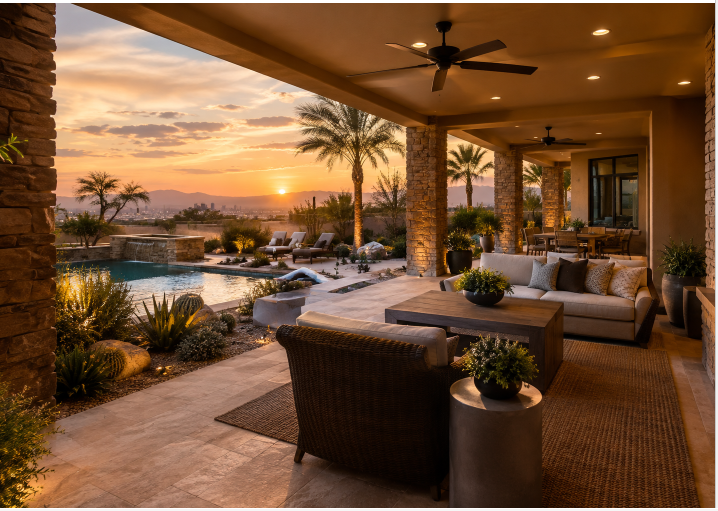
Outdoor areas should function as genuine extensions of the home. A covered patio with ceiling fans, weather-resistant finishes, and layered lighting can support breakfast, poolside relaxation, and evening entertaining. Retractable glass doors can create an appealing connection between a great room and patio, provided the transition includes shade and appropriate furnishings.
Features Worth Evaluating
- Outdoor kitchens: Look for durable counters, useful storage, ventilation, and convenient access to the indoor kitchen.
- Pool zones: Prioritize shaded seating, practical circulation, equipment access, and lounging areas that fit the household’s habits.
- Fire features: These can make patios more inviting on cooler desert evenings without dominating the entire yard.
- Lighting: Combine path lighting, task lighting, and softer ambient fixtures to improve safety and atmosphere.
The best question is simple: how often will this space be used? A modestly sized patio with thoughtful shade may serve a household better than a large, exposed deck designed mainly for photographs.
Wellness Spaces With Everyday Value
Wellness design has become a practical part of luxury living. A dedicated fitness room with resilient flooring, ventilation, storage, and natural light can be more useful than equipment placed in a garage or spare bedroom. Flexible rooms can also serve as a yoga studio, massage room, quiet reading space, or guest suite as needs change.
Bathrooms may include steam showers, sauna areas, or recovery-focused features, but buyers should consider service requirements before committing. Bedrooms deserve the same attention. Blackout shades, acoustic separation, quiet HVAC operation, and reliable temperature control can contribute to a more restful environment without adding visual clutter.
Climate-Smart Materials and Systems
In a high-end Las Vegas home, performance is part of luxury. High-performance windows, exterior shading, well-designed insulation, air sealing, and zoned heating and cooling can help rooms stay more consistent throughout the day. Durable flooring and exterior materials should be selected for both appearance and their ability to handle heat, dust, and frequent use.
Solar readiness, battery storage, electric vehicle charging, and whole-home leak detection may also be worth considering when they match the owner’s priorities. The DOE Efficient New Homes program provides a useful reference point for buyers who want to understand how verified energy performance can support comfort, health, and durability.
Flexible Kitchen Layouts
Luxury kitchens now need to accommodate cooking, entertaining, cleanup, and a polished visual setting. Many homeowners prefer a show kitchen for gathering and presentation, paired with a prep kitchen or scullery for catering, appliances, and cleanup. This arrangement can keep the main living area calm during larger dinners or events.
Walk-in pantries, adaptable islands, concealed appliance storage, and easy access to outdoor dining areas add practical value. When selecting stone, wood, metal, or cabinetry, consider cleaning routines, heat exposure, and repair needs alongside color and style.
Technology That Stays Out of Sight
The best smart-home systems feel intuitive rather than complicated. Centralized control of lighting, climate, shades, audio, security, and access can simplify routines, especially when the home has strong Wi-Fi coverage and structured wiring planned from the beginning. Lighting scenes for mornings, entertaining, and nighttime can be useful when controls remain easy for guests and service providers to understand.
Before purchasing, ask who services the system, whether software updates are supported, and how individual components can be replaced. Technology should quietly support the architecture, not become a maintenance burden.
Water-Wise Landscaping and Shade
Landscape design is central to comfort in the Las Vegas Valley. Shade trees, covered walkways, planted courtyards, gravel, natural stone, and drip irrigation can create an attractive setting while limiting the maintenance demands of large turf areas. Landscaping should also preserve important views while giving patios and bedrooms appropriate privacy.
Homeowners considering a conversion can review the Southern Nevada Water Authority’s Water Smart Landscapes Rebate information before removing grass or starting work, since program requirements and site-approval steps may apply. Drainage planning also matters because infrequent rain can still arrive quickly and heavily.
How Location Shapes Luxury
A well-designed residence is only part of the decision. Compare a property’s commute, access to healthcare, dining, schools, and recreation alongside views, traffic patterns, guard-gated entry, HOA obligations, and neighborhood character. Lot orientation deserves close attention because afternoon sun can influence both interior comfort and outdoor usability.
A smaller home in a private setting with thoughtful shade, a strong view corridor, and convenient access to daily needs may deliver more lasting satisfaction than a larger property with a difficult lot or limited outdoor comfort.
A Practical Buyer Checklist
- Define the lifestyle: Identify needs for entertaining, remote work, wellness, family visits, or hobbies.
- Calculate total ownership costs: Include insurance, utilities, HOA fees, landscaping, pool care, and system maintenance.
- Review the lot: Check privacy, views, drainage, slope, afternoon sun, and potential for usable outdoor rooms.
- Inspect major systems: Ask about HVAC, roof condition, plumbing, electrical capacity, irrigation, and smart-home infrastructure.
- Plan for change: Favor flexible rooms and accessible features that can serve future guests or evolving household needs.
Final Thoughts
Thoughtful Las Vegas luxury design is not about adding the longest list of upgrades. It is about creating a home that responds to the desert, supports the owner’s routine, and remains enjoyable to maintain. When comfort, performance, location, and personal style work together, a luxury home can feel exceptional long after the first showing.