
Table of Contents
- Start With A Clear Lifestyle Profile
- Compare The Full Monthly Cost
- Check Flood Exposure And Storm Readiness
- Measure The Daily Drive, Not Just The Map Distance
- Match The Community Type To Your Priorities
- Look Beyond The Interior
- Review Services And Future Needs
- Use Neighborhood Data And A Simple Scorecard
- Questions To Ask Before Making An Offer
- Choose The Area Before The Address
A beautiful kitchen, a screened pool, or a wide water view can make a home memorable, but the neighborhood determines how that home feels on an ordinary Tuesday. In Southwest Florida, a short distance can separate beach traffic from quiet inland streets, a low-maintenance condominium from a large-lot home, or a golf-centered routine from a boating-focused one. The best choice begins by comparing how each area supports your actual life.
For buyers researching Naples and nearby communities, Naples, FL real estate agent Greg Gorman is part of Team Paradise, a Naples-focused real estate team whose website offers property searches and neighborhood information for areas including Naples, Bonita Springs, Estero, Fort Myers, and Marco Island. That local perspective can be useful when comparing very different home types, from Gulf-access properties and golf communities to gated neighborhoods and new construction.
Start With A Clear Lifestyle Profile
Before saving listings, write down what the home needs to support. A seasonal retreat may prioritize lock-and-leave convenience and proximity to restaurants. A full-time household may place more weight on commuting, storage, medical care, school assignments, or a private yard. A future retirement home may need single-level living and manageable upkeep.
Separate must-haves from preferences. For example, beach access may be a preference, while a two-car garage, a first-floor primary bedroom, or room for a pet may be essential. Also consider whether you are comfortable with a condominium, a gated community, a master-planned setting, or an established neighborhood with fewer common rules. This early filter prevents buyers from touring homes that look appealing but do not fit their routine.
Compare The Full Monthly Cost
The purchase price is only one part of ownership. Build a monthly worksheet for every serious neighborhood, using estimates that apply to the specific property rather than broad averages. Include:
- Mortgage principal, interest, and property taxes.
- Homeowners insurance and, where appropriate, flood insurance.
- HOA, condominium, master association, or club-related fees.
- Community development district assessments, if applicable.
- Utilities, lawn service, pool care, pest control, and routine maintenance.
- Reserve funds for repairs, storm preparation, and replacement items.
Insurance availability and cost can differ substantially by building characteristics, location, and coverage selections. Buyers should read policy terms carefully and use the state of Florida’s homeowners insurance guidance as a starting point for understanding coverage questions before relying on an estimate.
Check Flood Exposure And Storm Readiness
Waterfront access, canals, elevation, drainage patterns, construction date, roof condition, and protective features can all influence a property’s risk profile and ownership planning. Listing descriptions are useful introductions, but they should not replace property-specific research and professional inspections.
- Review the current flood-zone designation and ask how the information affects lending or insurance requirements.
- Ask about prior water intrusion, storm repairs, insurance claims, and open permits.
- Check the age and condition of the roof, windows, exterior doors, shutters, and electrical systems.
- Ask whether backup power options are present and what equipment remains with the home.
- Compare similarly situated homes, rather than treating square footage as the only measure of value.
Published hazard information is best checked directly through the FEMA Flood Map Service Center, then discussed with the appropriate insurance, lending, inspection, and real estate professionals for the property under consideration.
Measure The Daily Drive, Not Just The Map Distance
A neighborhood can look close to a favorite destination yet feel far away during busier periods. Drive the routes you expect to use, ideally more than once. Test trips to work, grocery stores, pharmacies, restaurants, medical offices, beaches, marinas, and major roads. If airport access matters, make that drive too.
Pay attention to turns across busy roads, gate entry times, school drop-off traffic, and the ease of getting home after an evening out. A buyer who enjoys the energy of a beach-adjacent area may accept seasonal congestion, while someone seeking a quieter daily rhythm may prefer an inland community with simpler access to errands.
Match The Community Type To Your Priorities
Coastal And Beach-Adjacent Areas
These areas can appeal to buyers who value beach access, views, walkability, boating, and seasonal activity. The trade-off may include more visitor traffic, greater storm-planning considerations, and a different cost structure than an inland home.
Golf And Country Club Communities
Golf-oriented communities may offer amenities, social programming, and maintained common areas. Review membership requirements, transfer fees, dues, reservation systems, and club rules before assuming that a community’s amenities fit your household.
Master-Planned Communities
Master-planned communities can provide trails, fitness facilities, pools, gathering spaces, and coordinated landscaping. Buyers should review all association documents, current rules, future development phases, and nearby construction activity.
Established Inland Neighborhoods
Older neighborhoods may offer mature landscaping, varied architecture, and larger lots. They can also require closer attention to renovation history, drainage, permits, roof age, and deferred maintenance.
Look Beyond The Interior
A remodeled interior cannot change the sound of a nearby arterial road or the privacy of a narrow lot. During each visit, walk the street and notice traffic, lighting, sidewalks, drainage, construction, outdoor activity, and the distance between homes. Confirm practical details such as internet availability, cell service, guest parking, and access for service vehicles.
Read community rules before making an offer. Rental restrictions, pet policies, parking limits, fencing rules, exterior-change approvals, and vehicle restrictions may affect both your lifestyle and future plans for the property.
Review Services And Future Needs
Families may prioritize school assignments, parks, and youth activities, while other buyers may focus on medical access, walkability, low-maintenance living, or proximity to friends. Verify school information through the relevant district rather than relying on a listing. Consider access to hospitals, urgent care, pharmacies, grocery stores, repair providers, and evacuation routes.
Then look ahead five to ten years. Would the home still work if stairs became inconvenient, a remote-work setup changed, a household member needed more care, or you wanted to spend more time away from Florida?
Use Neighborhood Data And A Simple Scorecard
Citywide averages can hide important differences between waterfront condominiums, golf homes, inland single-family properties, and new construction. Review recent closed sales, active competition, pending listings, days on market, and the price gap between updated and dated comparable homes. Focus on the same neighborhood and similar property type whenever possible.
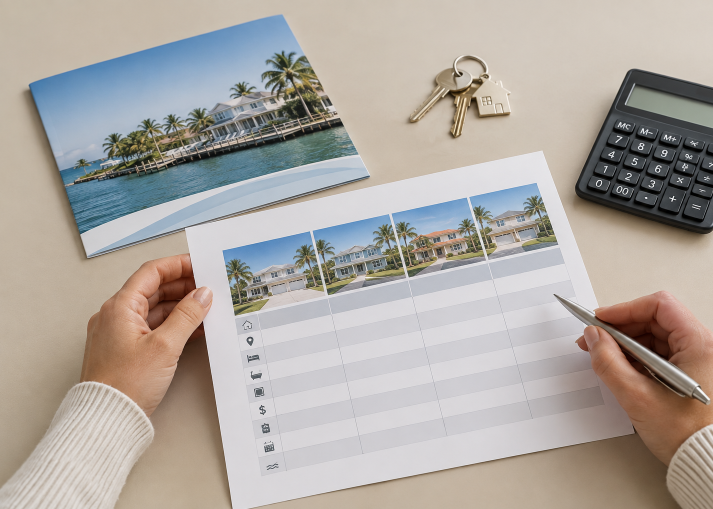
After each tour, score the area from one to five in these categories:
- Monthly cost: Is the complete ownership budget comfortable?
- Insurance and resilience: Are coverage and property conditions acceptable?
- Travel time: Will regular drives remain manageable?
- Lifestyle: Does the area support the activities you value?
- Maintenance: Does the home fit your desired level of upkeep?
- Future fit: Can the location adapt as your needs change?
Questions To Ask Before Making An Offer
- What are the annual costs beyond the purchase price?
- Are there pending assessments, major repairs, or planned projects?
- What insurance options are available for this property?
- What are the rental, pet, parking, and renovation rules?
- How do recent comparable sales support the asking price?
- Are there unresolved repairs, permits, or storm-related claims?
- How does the neighborhood function during its busiest periods?
Choose The Area Before The Address
Shortlist three areas, visit each more than once, and compare the full ownership picture before choosing a home. The right Southwest Florida neighborhood is personal. When budget, travel, risk, services, amenities, and future plans align, selecting the right address becomes a more confident decision.