
Custom metal fabrication is entering an exciting era of transformation, as cutting-edge technologies and changing industry expectations redefine how businesses operate and compete. Companies like Pathmark Fabrication are leading the charge, adapting swiftly to stay ahead in this evolving landscape. As customer demands evolve and the market grows increasingly competitive, decision-makers must stay informed of the latest trends shaping the future of fabrication.
Today’s metal fabrication companies are adopting a host of innovations that enhance everything from efficiency and accuracy to sustainability and domestic production capabilities. These advancements are not just setting new industry benchmarks; they are fundamentally altering what clients can expect from top-tier providers, making agility and innovation critical components of business success in 2026.
Key Takeaways
- Digital transformation tools are expediting processes and improving precision across fabrication workflows.
- Sustainability is a priority, with increased energy efficiency and reduced waste now central to operations.
- Reshoring manufacturing bolsters supply chain resilience and revitalizes local economies.
- Advancements in welding techniques are setting higher standards for quality and durability in fabricated products.
Embracing Digital Transformation
Digital platforms are revolutionizing the way the custom metal fabrication sector operates. Modern quoting and design software empower customers to upload their CAD files and access instant pricing, trimming considerable time from project schedules. This is especially helpful for manufacturers who need rapid turnaround, as it provides clients with Design for Manufacturability feedback and streamlines communication regarding part geometry and material selection. Improved automation and data integration are also enabling manufacturers to meet more exacting specifications and reduce costly mistakes.
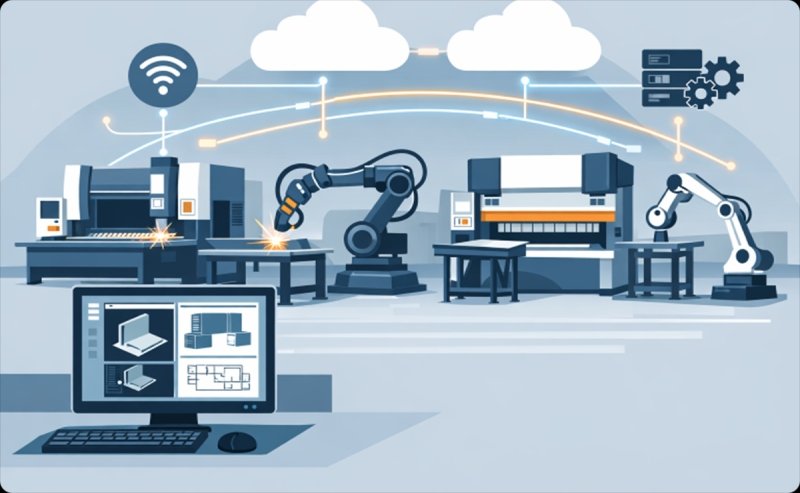
Additionally, the spread of Industrial Internet of Things (IIoT) technology is allowing fabrication facilities to connect their machines, processes, and analytics platforms more tightly than ever before. With sensors and smart devices in place, operators can remotely monitor production lines and leverage predictive analytics to optimize uptime, allocate resources efficiently, and maximize throughput. Cloud-based data storage and project management environments further unify teams, making collaborative projects easier to manage, whether a team member is in the office or on-site with a client.
Moreover, advances in artificial intelligence (AI) and machine learning are streamlining decision-making in ways previously unimaginable. AI-driven forecasting enables companies to predict demand surges, proactively order raw materials, and minimize inventory overhead, ensuring fabrication projects stay on budget and on schedule. These intelligent systems also help improve customer relationship management by identifying upselling opportunities and personalizing service offerings to retain valuable business clients.
Prioritizing Sustainability
The push toward sustainable production is unmistakable in modern fabrication shops. Facilities are increasingly relying on energy-efficient machinery and renewable power sources. The integration of LED lighting, high-efficiency motors, and variable-speed drives is making a measurable impact on energy consumption. Additionally, closed-loop recycling systems for metal scrap have become standard, greatly reducing waste streams and supporting a more circular economy model.
Many custom metal fabrication companies are also investing in greener materials and processes. For instance, water-based paints and solvent-free coatings are being adopted to lessen air pollution, while eco-friendly supply chain partnerships help reduce the carbon footprint throughout the fabrication lifecycle. Employee-driven initiatives, such as on-site recycling programs and carpooling, foster a culture of sustainability and social responsibility. As environmental regulations continue to tighten, those who embrace sustainable manufacturing early will enjoy a reputational and regulatory advantage.
The Reshoring Movement
Ongoing global supply chain uncertainties have renewed interest in reshoring manufacturing. Companies are investing more in domestic facilities to overcome shipping delays, rising costs, and logistical headaches experienced with offshoring. By building stronger local supply chains, manufacturers improve lead times, responsiveness, and ultimately customer satisfaction, invigorating local economies and supporting skilled labor markets at home.
Reshoring also strengthens intellectual property protection and quality control. With operations closer to home, organizations can better oversee production protocols and uphold safety and compliance standards that meet rigid regulatory frameworks. Localizing supply chains feeds a cycle of regional economic growth by creating jobs, investing in workforce training, and developing community infrastructure—all factors that build a more resilient and competitive industrial base.
Advancements in Welding Techniques
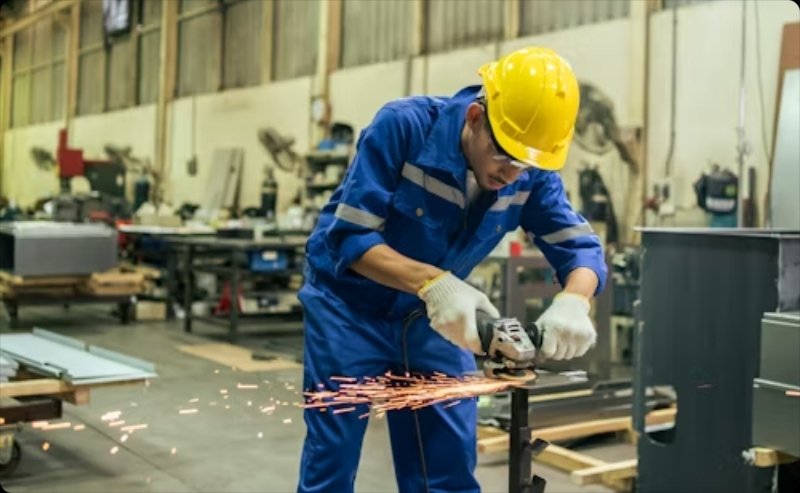
Welding remains at the heart of custom metal fabrication, and innovative techniques are further strengthening production quality. Modern welding practices incorporate pre- and post-heating, increasing structural integrity while minimizing the risk of weld failure from thermal stresses. Skilled technicians, paired with advanced welding equipment, play a vital role in delivering fabricated products that meet or exceed stringent industry standards. For more about recent manufacturing innovations, visit Manufacturing.net.
Computer-aided welding is also gaining traction, with automated welding robots improving batch repeatability and reducing variation from one weld to the next. These advanced machines can handle a wider array of materials and joint types, making them indispensable in high-mix, low-volume fabrication environments. Meanwhile, ongoing education initiatives and certification programs are helping to upskill the welding workforce, ensuring that human expertise keeps pace with machine innovation.
Leveraging Modular Fabrication
Modular fabrication is transforming how projects are assembled by enabling entire modules to be prefabricated and quickly assembled on-site. This method considerably reduces errors, on-site labor, and project timelines while allowing greater flexibility in scaling fabrication solutions to customer needs. Sectors such as construction, energy, and industrial manufacturing are especially benefiting from the speed, cost-effectiveness, and adaptability of modular systems.
As modularization techniques mature, there is a greater opportunity to standardize components and interfaces, leading to more seamless integration across project phases and with different suppliers. The adoption of Building Information Modeling (BIM) and digital twins in modular fabrication enables teams to visualize entire workflows in a virtual environment before breaking ground, reducing clashes and making customization easier. This shift not only shortens project schedules but also enhances safety by reducing the fieldwork required in potentially hazardous environments.
Integrating Additive Manufacturing
Additive manufacturing, more commonly known as 3D printing, is carving out a significant niche in the world of metal fabrication. This technology enables the creation of complex geometries that are difficult to achieve with traditional processes. By building parts layer by layer, additive processes reduce material waste and enable faster prototyping. This approach is accelerating innovation cycles and opening new design possibilities for high-performance, low-volume parts.
Combining additive manufacturing with traditional fabrication unlocks an expanded toolkit for meeting diverse customer requirements. Hybrid approaches allow companies to rapidly iterate on prototypes in-house, test fit and functionality, and then seamlessly move to full-scale runs. As metal 3D printing technologies continue to improve in speed, material selection, and affordability, their integration with CNC machining and laser cutting is expected to drive a new era of creative problem-solving in fabrication workflows.
Enhancing Quality Control
Quality control can make or break a reputation in the custom fabrication industry. Leading shops now rely on real-time monitoring and analytics for predictive maintenance, catching equipment malfunctions or potential defects before they escalate. Automated inspection systems further guarantee that every product meets exacting tolerances and high-quality benchmarks. This rigorous focus on quality results in fewer defects, greater reliability, and stronger customer trust overall.
Moreover, traceability tools are being integrated to track both materials and processes throughout production. With comprehensive digital records, fabricators can rapidly respond to customer queries, provide detailed certificates of compliance, and analyze historical data to spot trends and prevent recurring issues. These improvements make the supply chain more transparent and responsive while protecting both manufacturers and clients from costly recalls or warranty claims.
Conclusion
The custom metal fabrication industry is advancing with remarkable speed. Modern companies that embrace digital transformation, champion sustainable practices, and adopt the latest production techniques will be positioned to lead the sector well into the future. Remaining agile, investing in innovation, and maintaining a steadfast focus on quality are now the keys to successfully navigating a rapidly changing landscape.
For business leaders, it has never been more important to stay abreast of evolving technologies and industry best practices. By taking a proactive approach to workforce development and continuous learning, companies can adapt to shifting market dynamics and leverage the transformative potential of Industry 4.0 innovations. Whether through strategic investment, community engagement, or a relentless pursuit of operational excellence, the path forward is paved by those who commit to progress and collaboration.


